
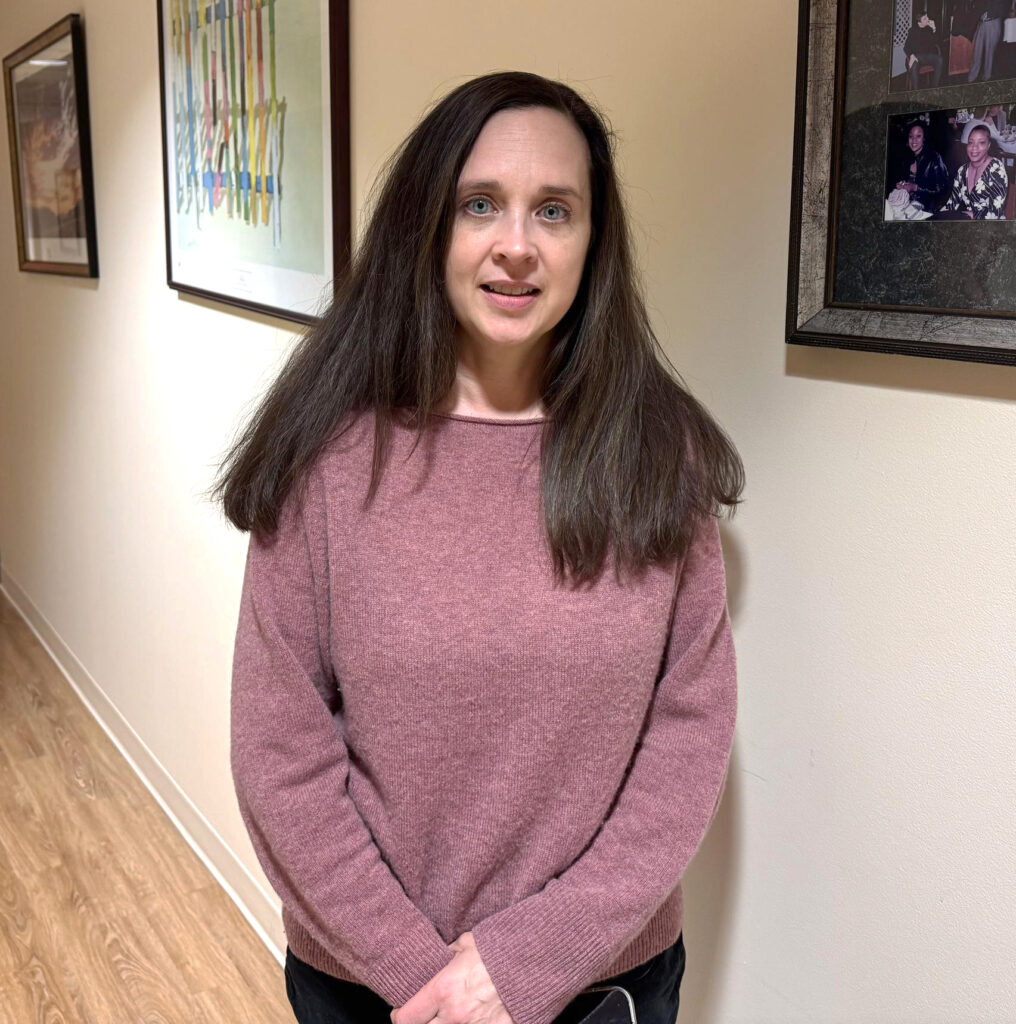
Laura
Since joining New Hope Community in November 2021 as a Behavior Intervention Specialist, Laura has brought flexibility, compassion, and a strong sense of teamwork to the Behavioral Services Department. After earning her master’s degree in social work and relocating from New York City, Laura was drawn to New Hope because of the variety of work her role offered.
With a background in special education advocacy, she quickly found that Behavioral Services allowed her to combine problem-solving, collaboration, and direct support in meaningful ways.
In Behavioral Services, no two days look the same, and that’s exactly what Laura enjoys most about the role.
Her work includes conducting functional behavioral assessments, developing behavior support plans, providing counseling, and collaborating with interdisciplinary teams that include house managers, nurses, service coordinators, and psychiatrists.
“It’s kind of a mix of everything,” Laura says. “We work with different teams, with the individuals themselves, and we do counseling.”
A typical day might begin with reviewing behavioral reports or responding to situations that occurred over the weekend, followed by meetings, counseling sessions, and visits to residential homes to observe and support both staff and the people we support.
Because every situation is different, Laura says the role requires flexibility and a willingness to jump in wherever support is needed, “I always tell people you have to be comfortable being a jack-of-all-trades,” she explains. “You’re often stepping into things where you don’t know exactly what’s going to happen.”
Much of Laura’s work focuses on helping staff understand behaviors and feel confident supporting the individuals in their care.
“Sometimes it’s really about supporting the staff,” she says. “Helping them feel comfortable doing the difficult things so they can manage challenging behaviors and dynamics.”
For Laura, the most meaningful moments come from seeing progress over time. She recalls working with an individual who struggled with severe self-injurious behavior until the right psychiatric support was found.
“The difference was incredible,” she says. “There was such a decrease in the behavior, it was like seeing a completely different person.”
Other successes are quieter but just as powerful, like helping an individual who had spent months isolated in a hospital room slowly become comfortable leaving his bedroom, engaging with others, and exploring the community.
“When he first came here, I didn’t know how far we would get,” Laura says. “But over time he started coming out more, getting out of the house, and he just seemed like a happier person.”
Moments like these remind Laura that patience, teamwork, and persistence can lead to meaningful change.